Treated Wood Decking — Complete Guide
Choosing the right decking material comes down to how it handles real weather, real budgets, and real upkeep. Pressure treated wood remains the most popular decking choice in Cincinnati, and for good reason: it costs less upfront, holds up well when built correctly, and delivers strong resale value. That said, treated lumber behaves differently through an Ohio winter than a showroom brochure suggests. This guide gives you an honest look at treated wood decking, including what it costs, how long it lasts through Hamilton County freeze-thaw cycles, and what maintenance you should actually plan for. By the end, you will know whether treated wood fits your project or whether composite makes more sense for your home.
What You'll Find in This Guide
Coming soon — we're building out this topic cluster.
Prefer to have a pro handle it? Treated wood decking is one call away.
How Pressure Treated Wood Performs Through Cincinnati Winters
Pressure treated wood starts as standard pine lumber, usually southern yellow pine. Manufacturers force preservatives deep into the wood under pressure, which protects it against rot, decay, and insect damage. As a result, treated lumber can sit in contact with soil and moisture for decades without breaking down the way untreated wood would.
However, preservatives do not protect against movement. That distinction matters more in Cincinnati than almost anywhere else. Hamilton County sees dozens of freeze-thaw cycles every winter, where temperatures swing above and below freezing within days or even hours. Moisture soaks into the wood during a thaw, then expands as it freezes. Over time, this cycle opens small checks and cracks in the surface of deck boards. It also stresses the connections between boards, joists, and posts.
Warping, Movement, and How to Prevent It in Treated Wood
Yes, treated wood can warp, and homeowners ask us about this constantly. Treated lumber leaves the treatment plant saturated with moisture. Consequently, boards shrink as they dry over their first several months on your deck. Boards that dry unevenly can cup, twist, or bow. You cannot eliminate this entirely, but a careful builder can minimize it. Proper fastening with screws rather than nails, correct gapping between boards, and picking straight stock at the lumberyard all reduce warping dramatically.
Footings matter just as much as boards. In practice, the biggest structural threat to any Cincinnati deck is frost heave. Ground moisture freezes, expands, and pushes shallow footings upward, which racks the frame above. For this reason, Hamilton County and surrounding jurisdictions require deck footings set below the local frost depth. A deck built on properly depthed concrete footings will stay level and square through winter after winter. A deck built on shallow piers or surface blocks will not. When you compare quotes, ask every contractor how deep they pour footings and whether they pull the required permit. The answers tell you a lot about the deck you will actually get.
What a Treated Wood Deck Costs and What You Get Back
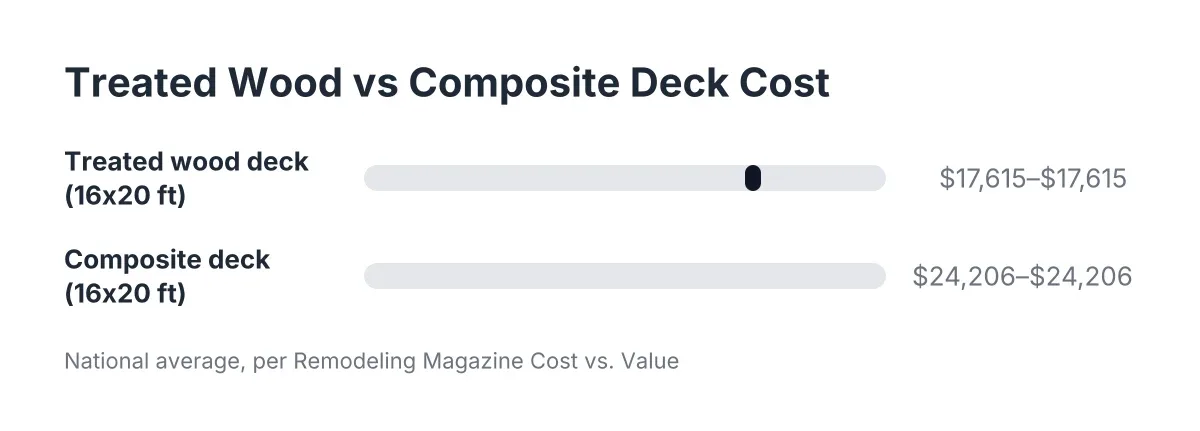
Cost drives most material decisions, so let's put real numbers on the table. Pressure treated wood carries the lowest upfront price of any mainstream decking material. Nationally, a new 16-by-20-foot pressure treated wood deck costs an average of $17,615 and returns about 83% of that cost at resale, according to Remodeling Magazine (Cost vs. Value Report). The same deck in composite runs $24,206 with a 68% ROI in that report. In other words, treated wood costs roughly a third less and recoups a larger share of your investment when you sell.
Your actual Cincinnati price depends on several factors. Deck size and height matter most, since taller decks need longer posts, more framing, and code-compliant guardrails. Site conditions play a role too. A sloped Hamilton County backyard, tricky access for equipment, or removal of an old deck all add labor. Additionally, railing choice swings the budget more than most homeowners expect. A wood-framed deck with basic wood railing sits at the low end. Upgrade to metal balusters or a drink-rail cap and the number climbs.
Comparing Treated Wood vs Composite on Total Cost
Upfront price only tells half the story. To compare treated wood vs composite fairly, look at cost over the life of the deck. Treated wood needs cleaning and a fresh coat of stain or sealer every two to three years in our climate. Each cycle costs money if you hire it out, or a weekend of your time if you do it yourself. Composite skips the staining but costs significantly more on day one.
For many Cincinnati homeowners, the math still favors treated wood, especially on larger decks where the composite premium runs into thousands of dollars. Beyond the spreadsheet, there is a lifestyle question. If you enjoy weekend projects and want the look and feel of real wood, treated lumber rewards you. If you want to never think about your deck surface again, composite earns its premium. Either way, the payoff goes beyond resale. According to the National Association of Realtors, 81% of homeowners say they enjoy their homes more after adding a deck. That daily enjoyment is the return most families actually feel.
How Long a Treated Wood Deck Lasts and How to Maintain It
How long does a wood deck last? In Cincinnati, a well-built and well-maintained treated wood deck typically lasts 15 to 25 years. Neglected decks fall well short of that range. The gap between those outcomes comes down almost entirely to two things: build quality and maintenance habits.
Build quality sets the ceiling. Frost-depth footings keep the structure level. Proper ledger flashing keeps water out of the connection between your deck and your house, which is the single most common failure point on older decks. Joist tape over the framing protects the structure where boards trap moisture. None of these details show up in a photo, but they add years to the deck's life.
Maintenance determines whether the deck reaches that ceiling. This is not a small issue nationally. The North American Deck & Railing Association (NADRA) estimates about 30 million decks in the United States sit beyond their useful life and need repair or replacement. Many of those decks failed early because water got where it should not, and nobody caught it in time.
A Realistic Treated Lumber Maintenance Schedule
Treated lumber maintenance is simple, but it has to happen on schedule. Here is what works for Cincinnati's climate. First, let a brand-new deck dry for several months before staining, since fresh treated lumber will not absorb finish properly. After that, clean the deck each spring with a deck wash and a stiff brush or light pressure washing. Then apply a quality semi-transparent stain or water-repellent sealer every two to three years. The water test tells you when it is time: sprinkle water on a board, and if it soaks in instead of beading, the deck needs a new coat.
Additionally, walk the deck once a year and look for trouble. Check for soft spots near the house, popped fasteners, wobbly railings, and cracks around post bases. Small repairs cost little when caught early. However, a rotted ledger or heaved footing can force a full rebuild. If your existing deck already shows those symptoms, resurfacing or replacement may make more sense than another round of stain. An honest assessment from a local deck specialist will tell you which side of that line you are on.
Ready to Get Started?
If you are weighing treated wood against composite for your Cincinnati deck, we can walk you through both options with real local pricing and zero pressure. Our team builds treated wood decks with frost-depth footings, proper flashing, and the details that survive Ohio winters. Reach out for a free design and estimate conversation, and get a straight answer on the right material for your home and budget.